· LumbridgeCorp
Introducing Lumbridge
The open engine for agentic organizations: what it is, what state it is in, and when the source opens.
Lumbridge is the software our company runs on, and on November 13, 2026 we open its source.
We call it the open engine for agentic organizations: twelve parts that work as one, and every part is open. An agentic organization is a company where AI agents do much of the day-to-day work and people set direction, review and approve. Lumbridge is the shared system that kind of company runs on: bare metal, then Ubuntu, then Lumbridge.
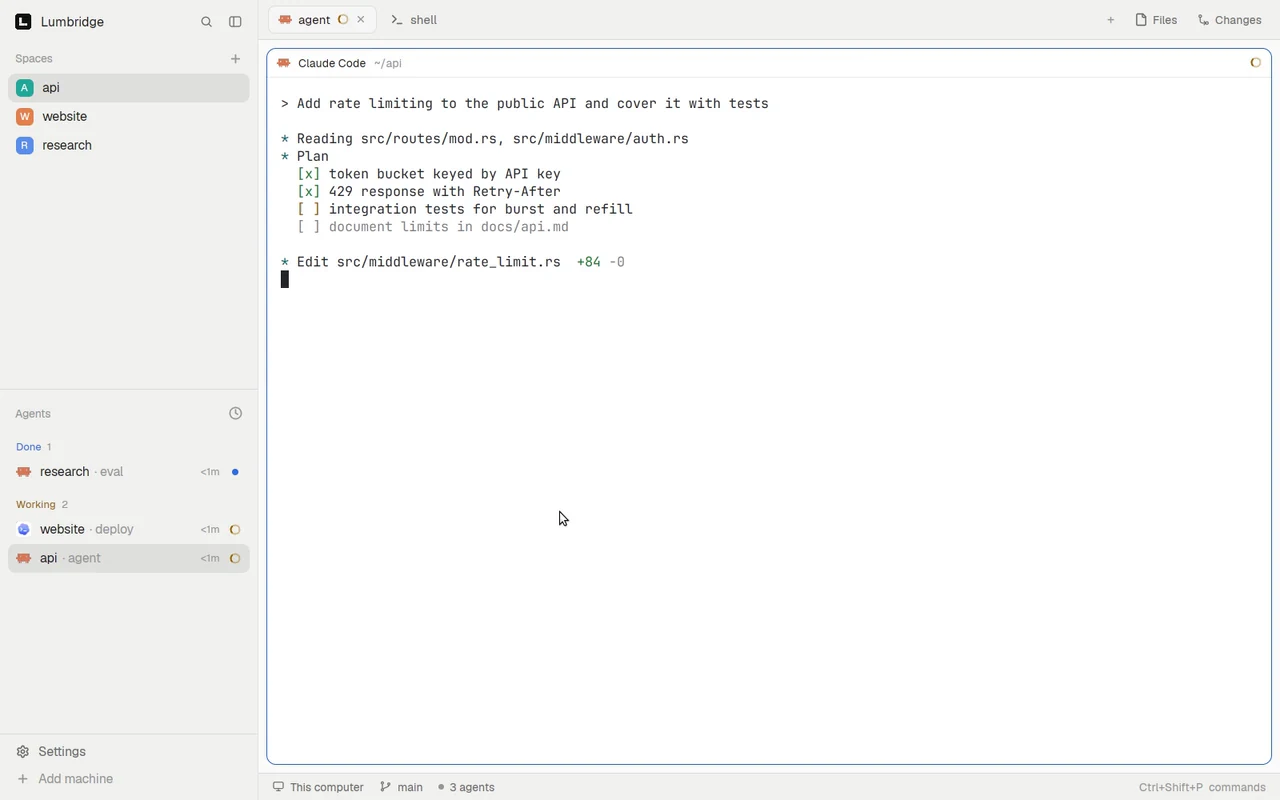
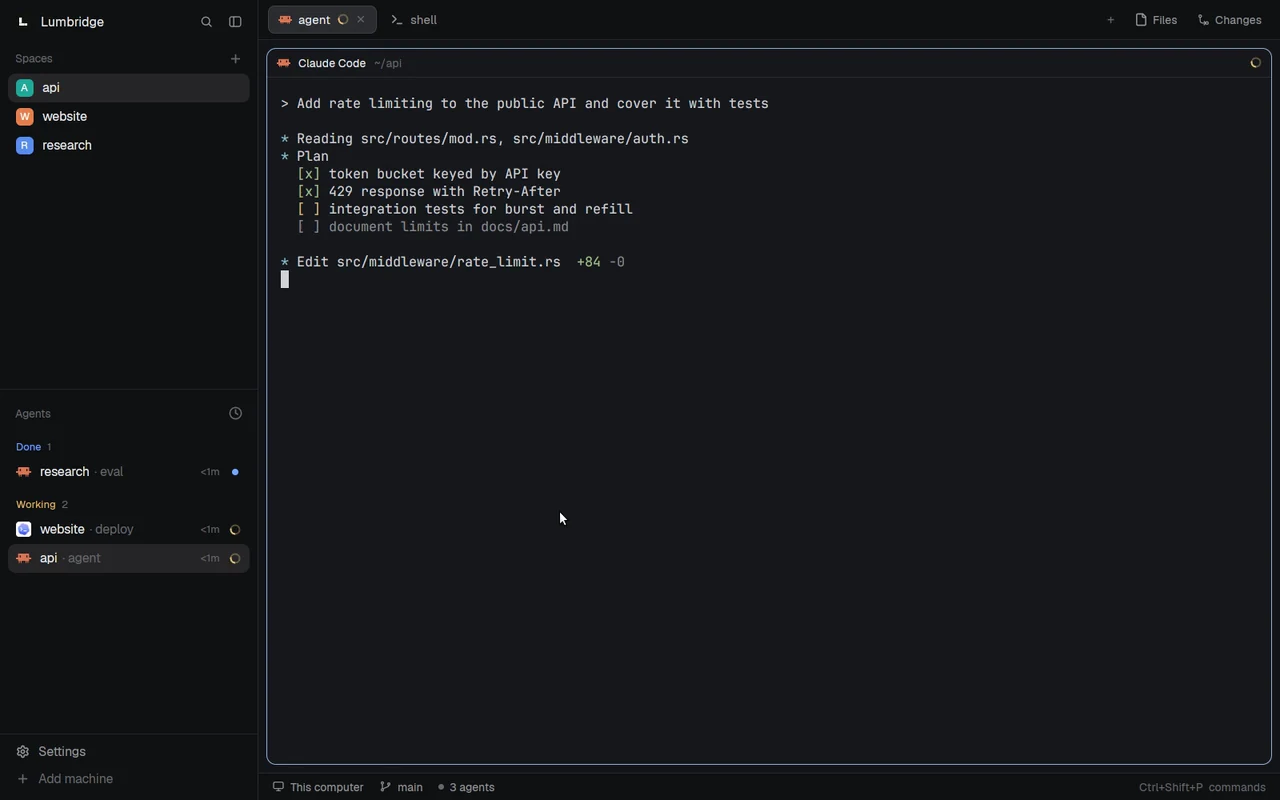
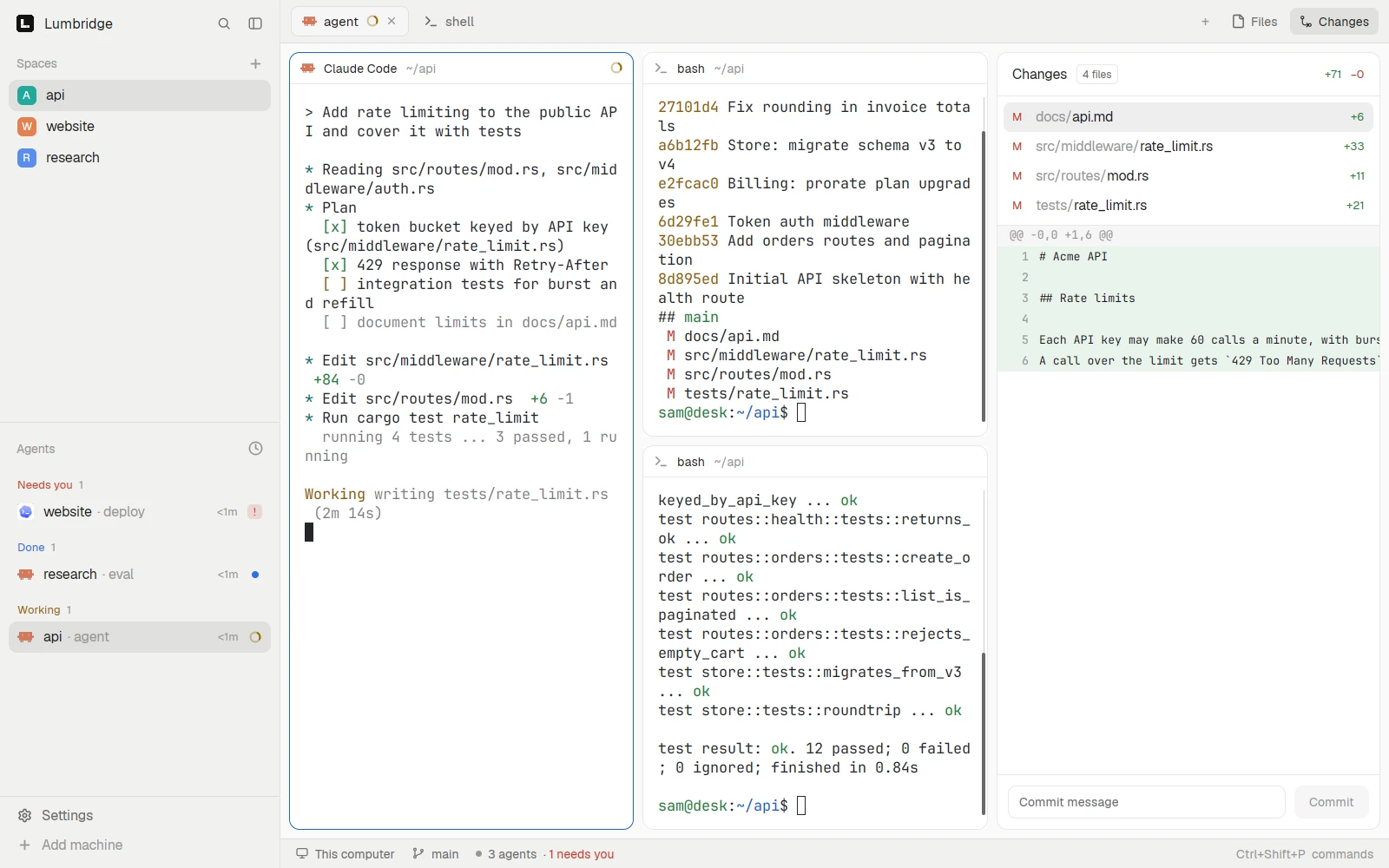
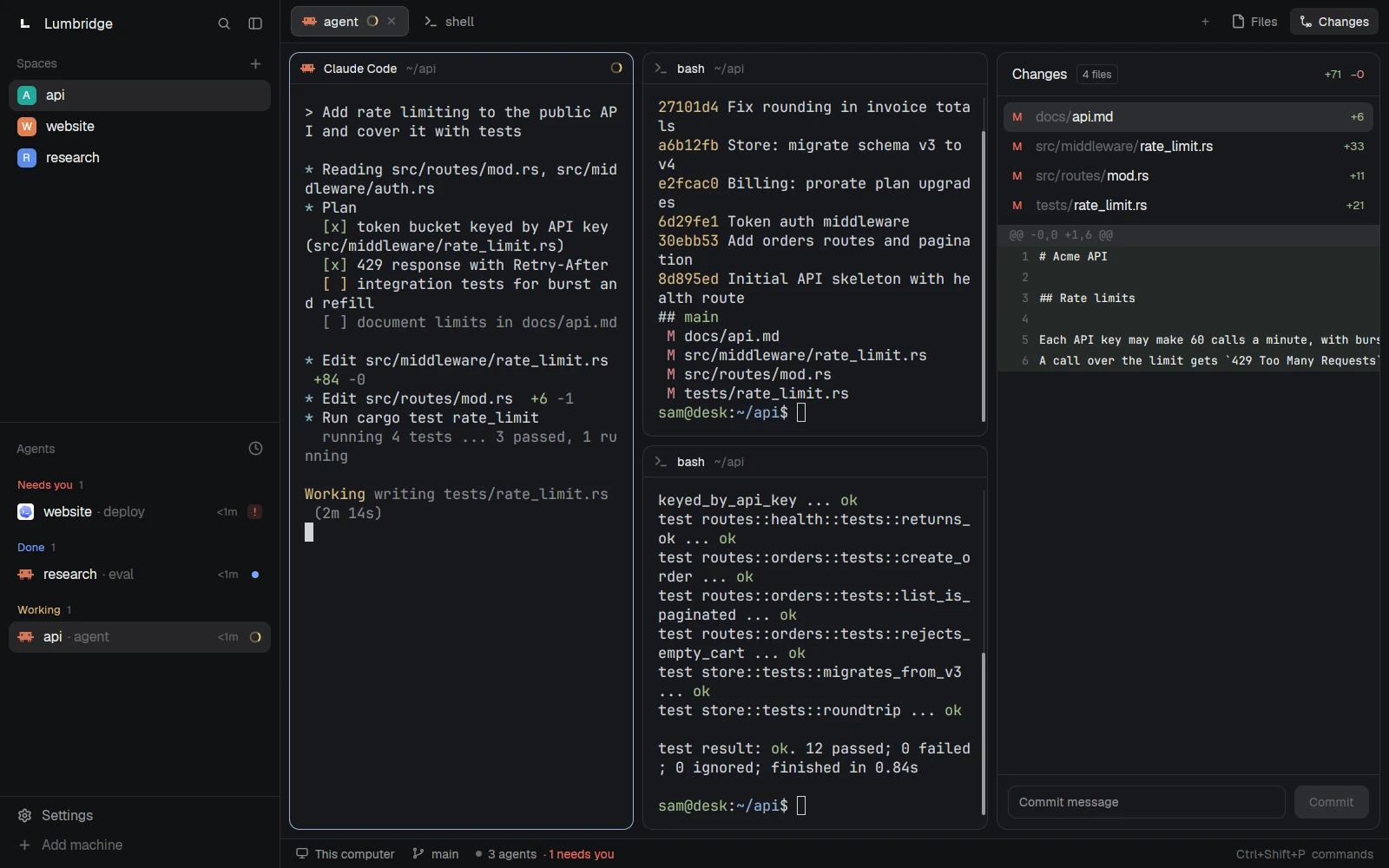
Agent tools stop at the terminal. A company doesn’t.
There are good tools for running coding agents in terminals. Three of our parts began as forks of one. But a company also runs on mail, documents, code review and a model bill. When agents do real work, they need all of it, with the same rules people follow.
That is why this is an engine and not one more agent tool. Three rules hold across every part.
- Agents are first-class users. Every part has a command line and a local socket. An agent uses the same door a person does and leaves the same trail.
- Your machines, your data. Mail, notes, documents, voice and code stay on hardware you control. Nothing needs a cloud account to run.
- People hold the gates. Agents read, draft and build. Sending, merging and anything else that can’t be undone waits for a person.
It is not a Linux distribution. It installs on a standard Ubuntu long-term-support release and leaves the system underneath alone. It does not replace your coding agents either. It runs the ones you already use from a terminal.
The stack, bottom up
- Machines you own or rent.
- Ubuntu, unchanged.
- Models. Lumbridge Computer runs open models on a GPU box you own. Lumbridge 1 is our own model, sold by the token.
- Runtime. Lumbridge Core keeps terminals and agents running on every machine after you leave.
- Build. The Factory turns an issue into a pull request. Checks and a second agent review it. A person merges.
- Workspace. The App, the TUI and Mobile show the same kind of work at a desk, in a terminal and on a phone. Mods change the App without forking it.
- Voice. Voice turns speech into text and Speak reads text aloud, on your own hardware.
- Work. Mail, Notes and the Library, which agents read and write under rules.
- Your people, on top.
That is twelve parts plus the model. Each part is its own program with its own repository. Most are written in Rust. The Factory is Python today, Mods are JavaScript, and the Voice front in service is Python. Each part installs and runs on its own, except that the App and Mobile need Core underneath.
reviewer is an agent template you save first.lbc machine add deploy@build-1 --name build-1
lbc run --bg --on build-1 --cwd /srv/api --name tests cargo test
lbc run --bg --name review reviewer "Review src/auth.rs. Read-only."
lbc wait review --timeout 600
lbc read review --lines 100
lbc attach build-1/tests
What state it is in
Unreleased. Nothing is public today and there is nothing to download. We are a small AI lab in San Francisco. We run our own company on this stack every day, which is how we know where it works and where it does not.
The parts are at different stages. Eleven are in daily use here. Mail is in testing and has not had a live account connected yet.
In daily use by us does not mean ready for you. Every part is built from source and there is no installer. Core, Mobile and the Library have no accounts, roles or per-client permissions. The Factory works with Gitea only. Computer targets one kind of GPU box. The dictation app is macOS only. Each part’s page carries a “Not yet” list. Read it before you plan around a part.
When and how the source opens
The source opens on November 13, 2026 at github.com/lumbridge-corp, all twelve repositories together. The code is licensed under the Apache License 2.0, unmodified. The copyright holder is Lumbridge Corp.
Until then each repository is named on this site, but private. If you want a part early, ask through the contact form at /apply. A person replies.
We post progress on X, which is our only social account. There is no Discord. The next three posts cover the license, how the release works, and the projects we built on.